How We Work
People-Centred Solutions for Lasting Change
Our approach combines mental health care, community action, rights and development to build a more inclusive Ghana.
Stronger People. Inclusive Communities. A Brighter Tomorrow.
Our Approach
The Mental Health and Development (MHD) Model
We implement the unique, innovative, people-centred and rights-based BasicNeeds Mental Health and Development (MHD) model, developed by BasicNeeds Trust, UK.
Its activities strengthen systemic and community health and social structures to enhance integrated Mental Health and Psychosocial Support Services (MHPSS); support practical initiatives to secure recovery and livelihoods for people with mental health conditions or epilepsy, their primary caregivers and families; improve equity; and empower persons with lived experience, ensuring their full and effective participation in development processes, social protection and inclusive public policy and services.
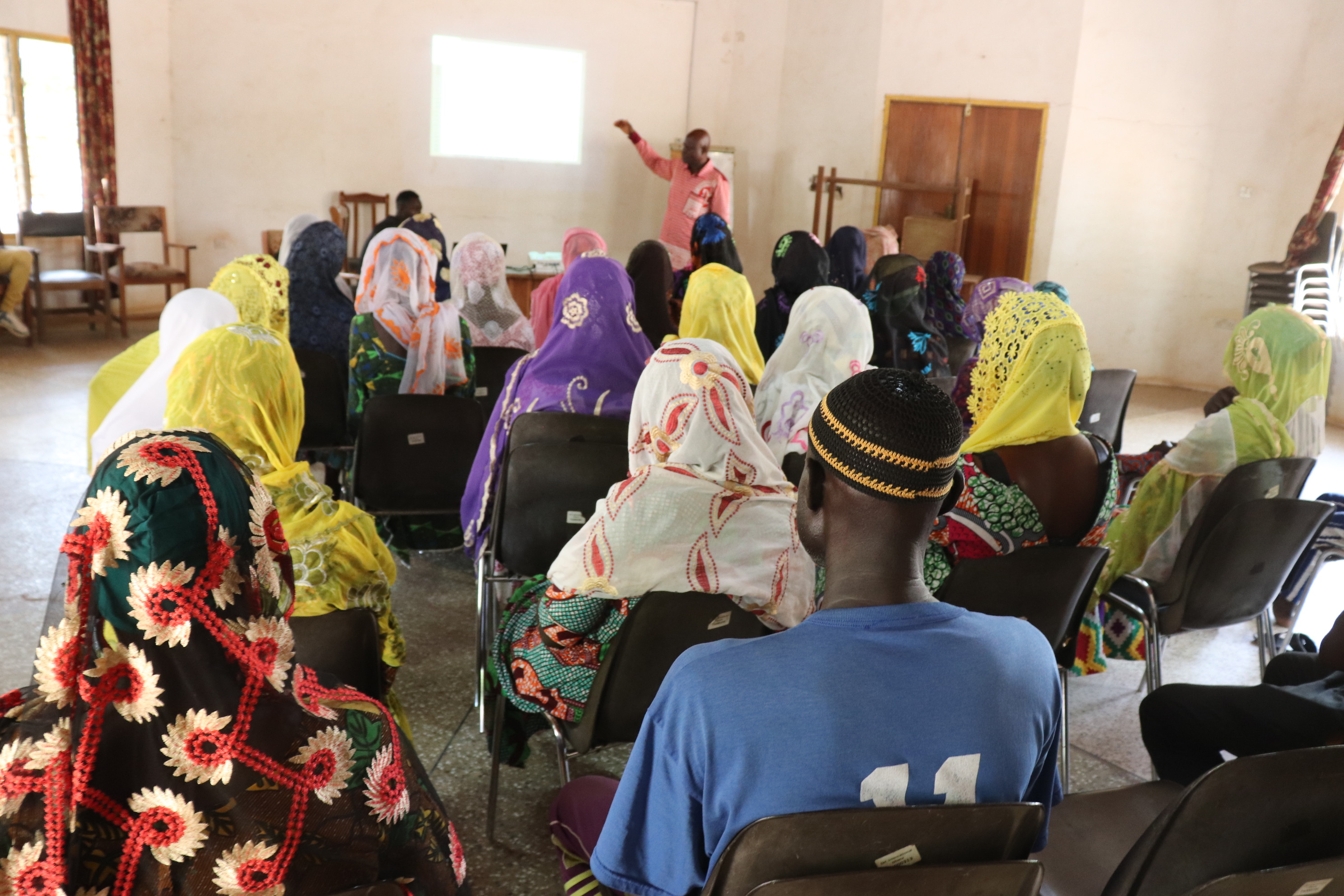
Mental Health. Development. Dignity. Opportunity.
Our Approach to Work
Our Model Is Community Focused
The BasicNeeds Mental Health and Development model places the community at its centre. It works as a cycle: talking to the community and identifying problems, treatment, local volunteers and self-help groups, training and micro-credit for livelihoods, reducing stigma, acceptance, and a return to community life.
01 · Talk to Community
(Capacity Building)
We start by talking with communities and building their capacity to understand mental health and identify problems.
→ Identify problems
05 · Acceptance
As stigma is reduced, families and communities accept and include people, who return to community life.
→ Return to community
Community
At the centre of our model
02 · Treatment
People with mental health conditions or epilepsy are supported to access treatment.
→ Local volunteers
04 · Livelihoods
Training and micro-credit support livelihoods that help people secure their recovery.
→ Reduce stigma
03 · Self-Help Groups
With local volunteers, people and their primary caregivers come together in self-help groups for peer support.
→ Training · Micro-credit
Community
At the centre of our model
01 · Talk to Community
(Capacity Building)
We start by talking with communities and building their capacity to understand mental health and identify problems.
→ Identify problems
02 · Treatment
People with mental health conditions or epilepsy are supported to access treatment.
→ Local volunteers
03 · Self-Help Groups
With local volunteers, people and their primary caregivers come together in self-help groups for peer support.
→ Training · Micro-credit
04 · Livelihoods
Training and micro-credit support livelihoods that help people secure their recovery.
→ Reduce stigma
05 · Acceptance
As stigma is reduced, families and communities accept and include people, who return to community life.
→ Return to community
↻ The cycle continues as people return to, and participate in, community life.
Our five areas of work — Capacity Building, Community Mental Health, Secure Livelihoods, Policy Advocacy & Research, and Collaboration — are the practical ways we put this community-focused model into action.
Five-Module Approach
Our Model in Action
The MHD model is a five-modular approach that brings together mental health, rights, development and community action.
01
Identifying, mobilizing, sensitizing and training mental health development stakeholders.
02
Enabling effective and affordable community oriented mental health services.
The MHD Model
People • Communities
Rights • Development
03
Facilitating opportunities for affected individuals to gain or regain the ability to work, earn and contribute to family and community life.
04
Generating evidence from the practice of mental health and development.
05
Forging partnerships with stakeholders involved in implementing the model on the ground and/or responsible for policy and practice decisions to improve mental health provision.
Our Integrated Focus
A Holistic Approach for Stronger Communities
Our work treats mental health as both a rights and development issue and a medical issue. We build inclusive communities, address illness through improved treatment and reintegration, and tackle poverty to enable sustainable recovery.
Rights
Development
Health
Livelihoods
People. Possibilities. Progress.
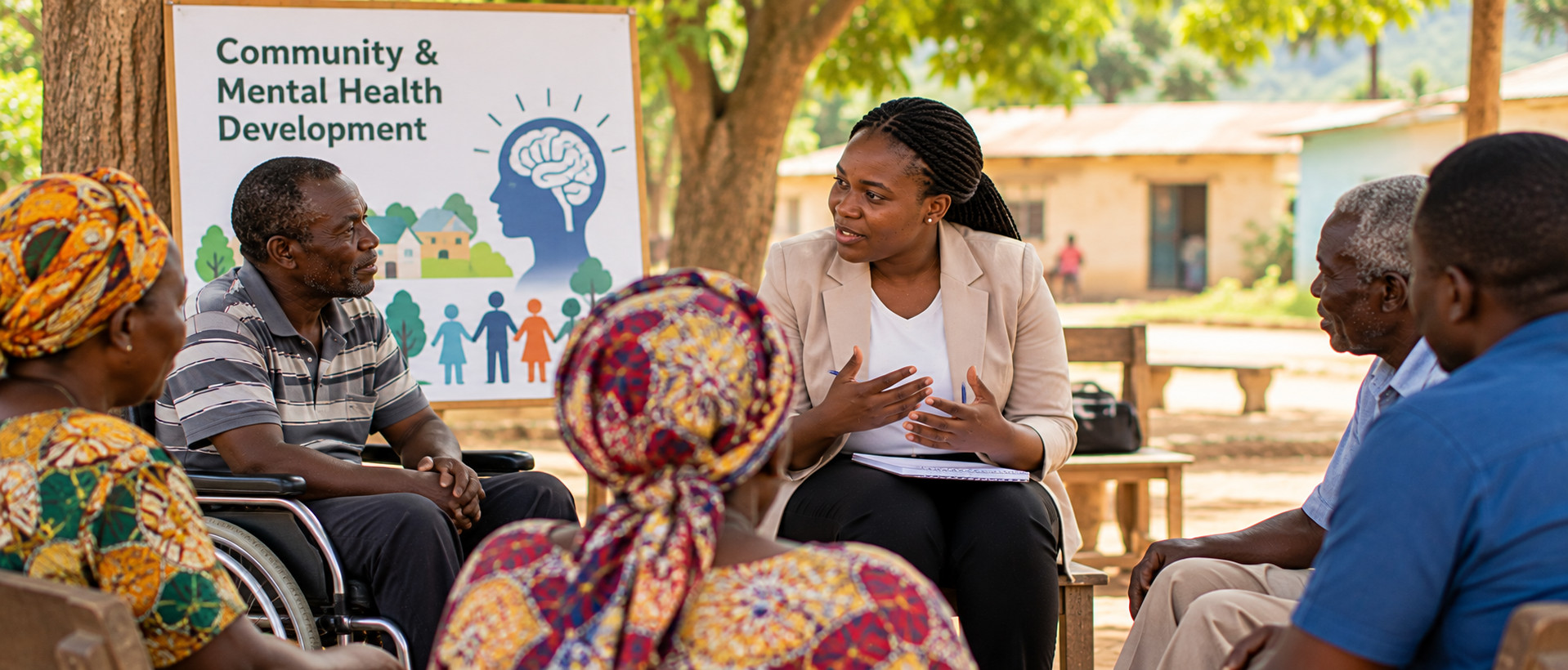
Community Voices at the Centre
Participation. Capacity. Policy Change.
The model recognises the right of people with mental illness or epilepsy to be consulted about how programmes and projects are managed. We emphasise building the knowledge and skills of individuals, communities and organisations, and work to influence mental health policy at local, national and international levels.
Self-help peer support groups of people with mental health conditions and primary caregivers provide peer and emotional support to one another, and lead self-representation with government and other duty bearers.
Stronger Together
Together for a Fairer, More Inclusive Ghana
Discover our projects and see how we put the MHD model into practice across communities.